> For the complete documentation index, see [llms.txt](https://docs.paveapi.com/llms.txt). Markdown versions of documentation pages are available by appending `.md` to page URLs; this page is available as [Markdown](https://docs.paveapi.com/how-pave-works/languages.md).
# Languages
Introduction to PAVE's User Interface Language Internationalization
PAVE is committed to providing a seamless experience for its users all over the world. With the aim of expanding its global reach, PAVE has undergone a significant overhaul in its language handling capabilities. The company has implemented a new approach to language management, which involves internationalizing its user-facing text from the views and layouts of its key components - the client dashboard, the PWA Capture UI, and the park page.
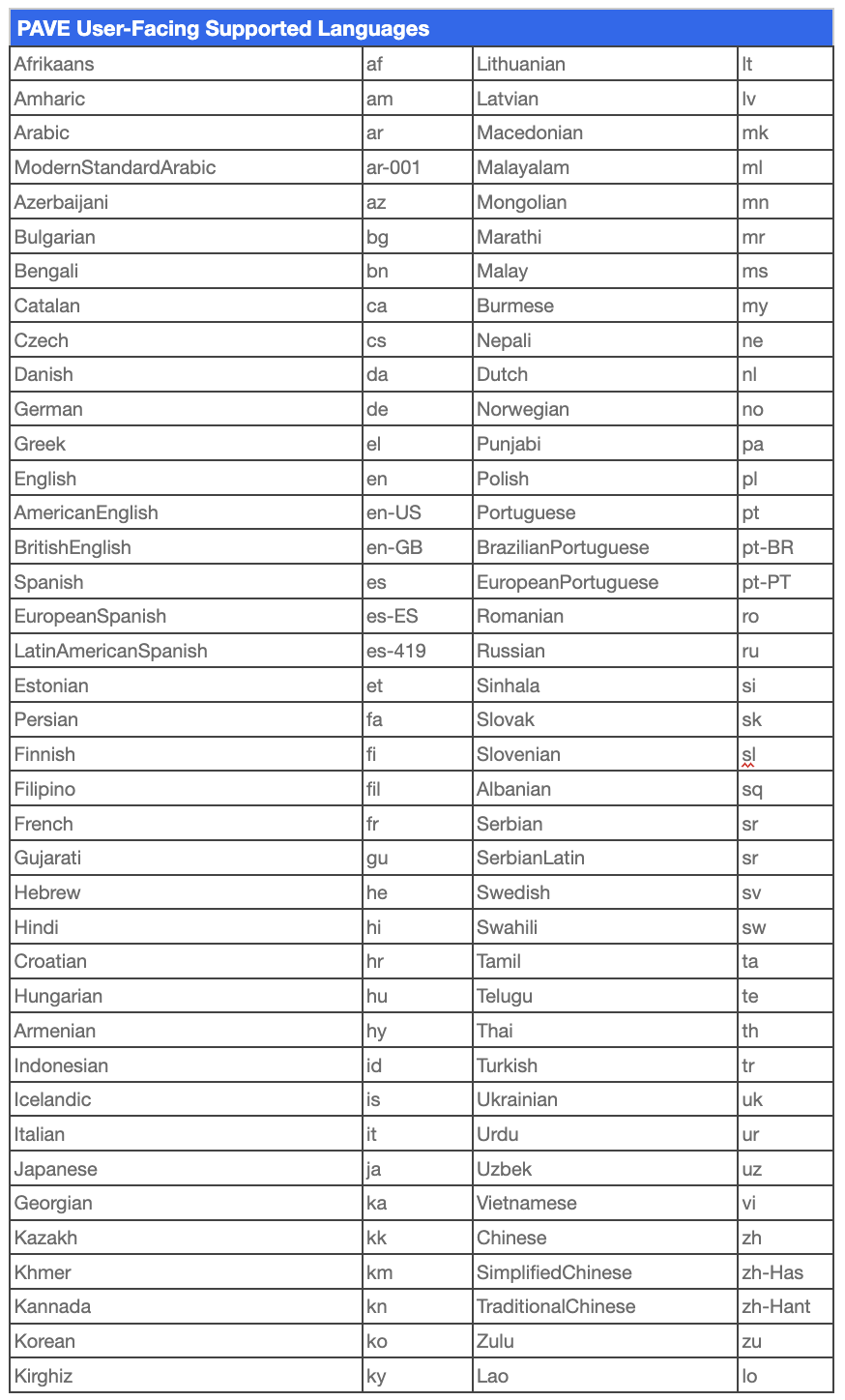
With this new language internationalization, PAVE's user interface can now automatically render text to match the language settings of the user's browser in a staggering 78 different languages. This means that no matter where PAVE's users are located, they will be able to access its platform and its features in their preferred language, making the experience more accessible and enjoyable.
The redesigned language handling capabilities of PAVE are a significant step forward in the company's mission to provide a world-class experience to its users, no matter where they are located.
### Language Localization of API Results and PDF Condition Report
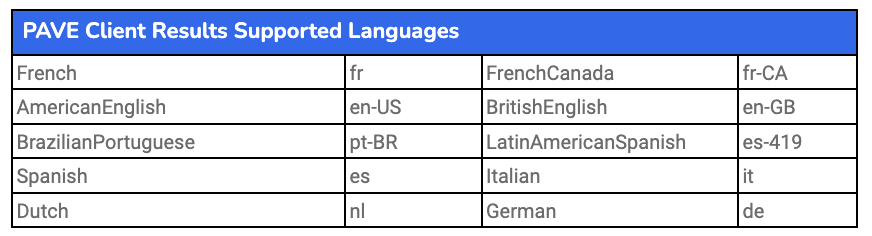
PAVE's commitment to providing a seamless and accessible experience for its users extends beyond its user interface. We have also taken steps to localize its API damage results and PDF condition reports in various languages. When a new license is set up for a client, they can choose up to two languages from the ten available languages for their OpenAPI account. These selected languages will be used to generate the results and PDF report in the client's preferred language.
PAVE's language localization efforts ensure that its clients can access their inspection results and PDF reports in a language that is most suitable for them. As PAVE continues to expand into new regions, the company plans to add additional languages to its available options, further increasing the accessibility of its platform.
We hope, PAVE's language internationalization and localization efforts are a testament to our dedication to providing a world-class experience to its users. With the ability to access its platform and results in their preferred language, PAVE's clients can focus on making informed decisions without being hindered by language barriers.